
Groundbreaking Casey model puts inclusion at the heart of community sport
The City of Casey is embedding disability inclusion into the way it supports and develops community sporting clubs, with accreditation linked to reductions in eligible Buildings and Sportsgrounds charges.
Through its new Casey Club Accreditation Program, inclusion now sits alongside good governance and financial sustainability as one of the foundations of a strong, well-run sporting club.
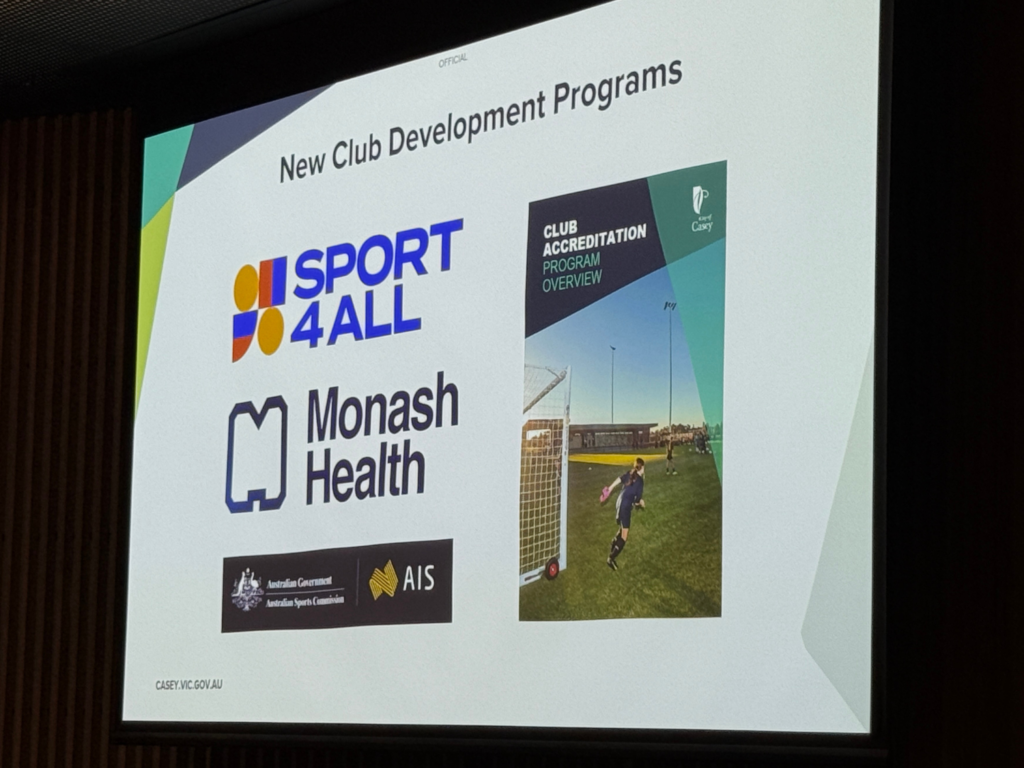
Sport4All has been incorporated into the club accreditation pathway to help clubs assess their current practices, build their knowledge, develop an Inclusion Action Plan and put meaningful changes into practice.
It represents an important shift in the way disability inclusion can be embedded into community sport: moving inclusion beyond a standalone initiative and into the systems, incentives and expectations that shape how local sporting clubs operate.
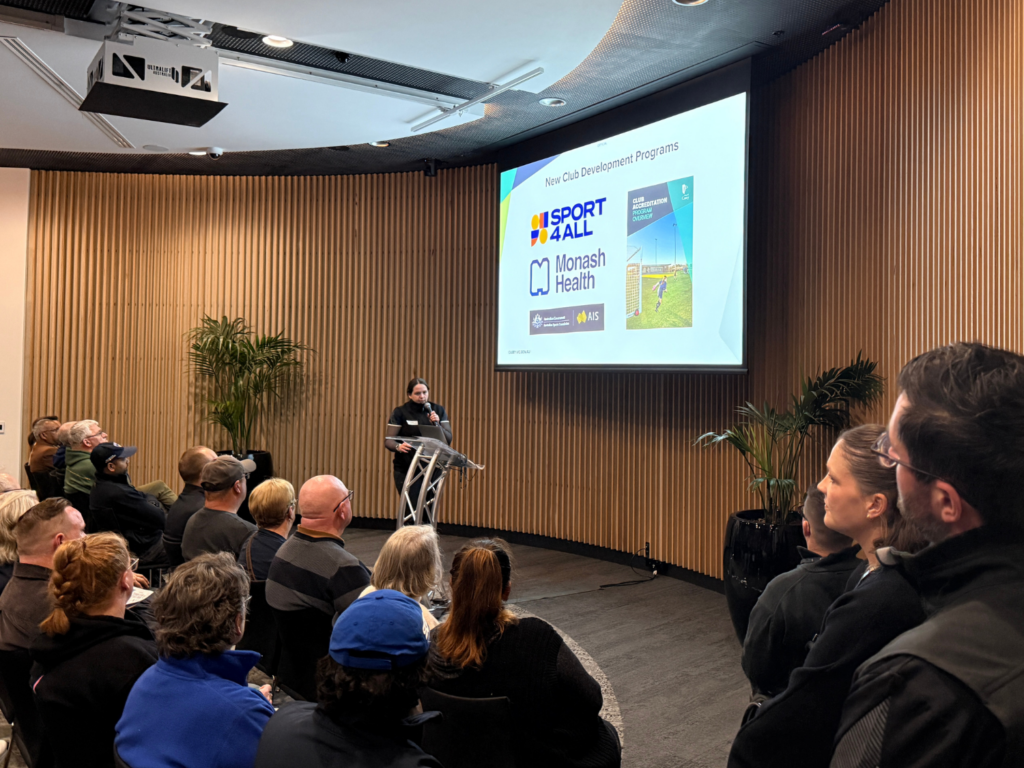
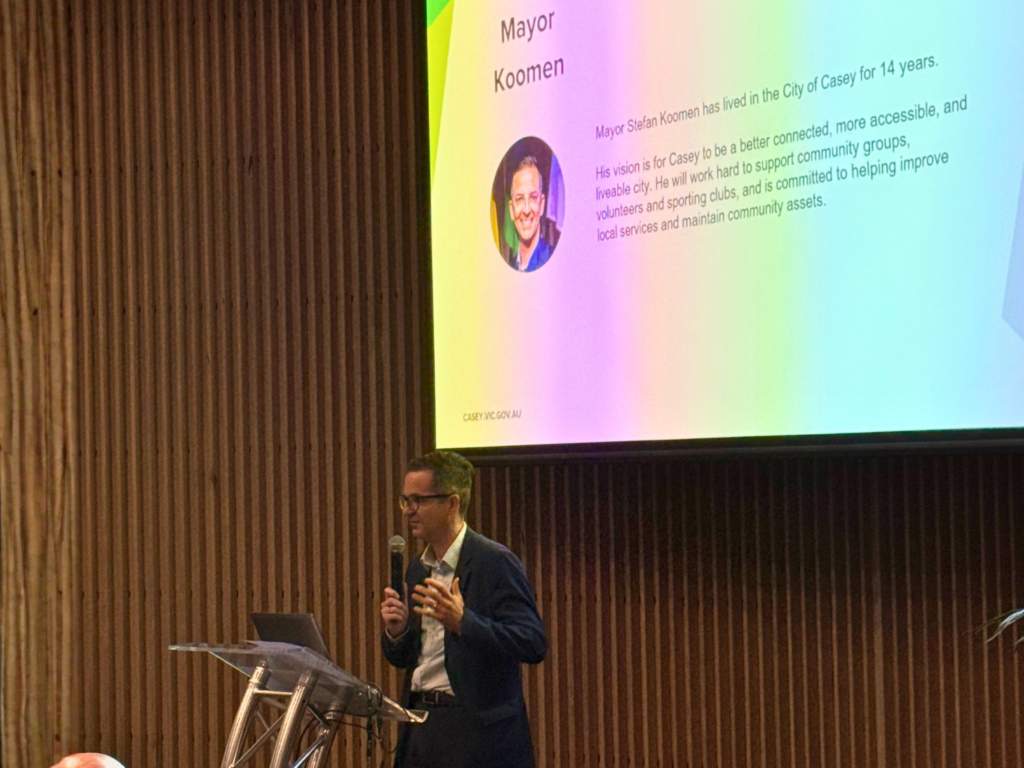
The scale of the opportunity was evident at the City of Casey’s recent seasonal sporting forums.
The Summer Forum brought together 106 attendees representing 58 clubs, while the Winter Forum attracted 74 attendees representing 57 clubs.
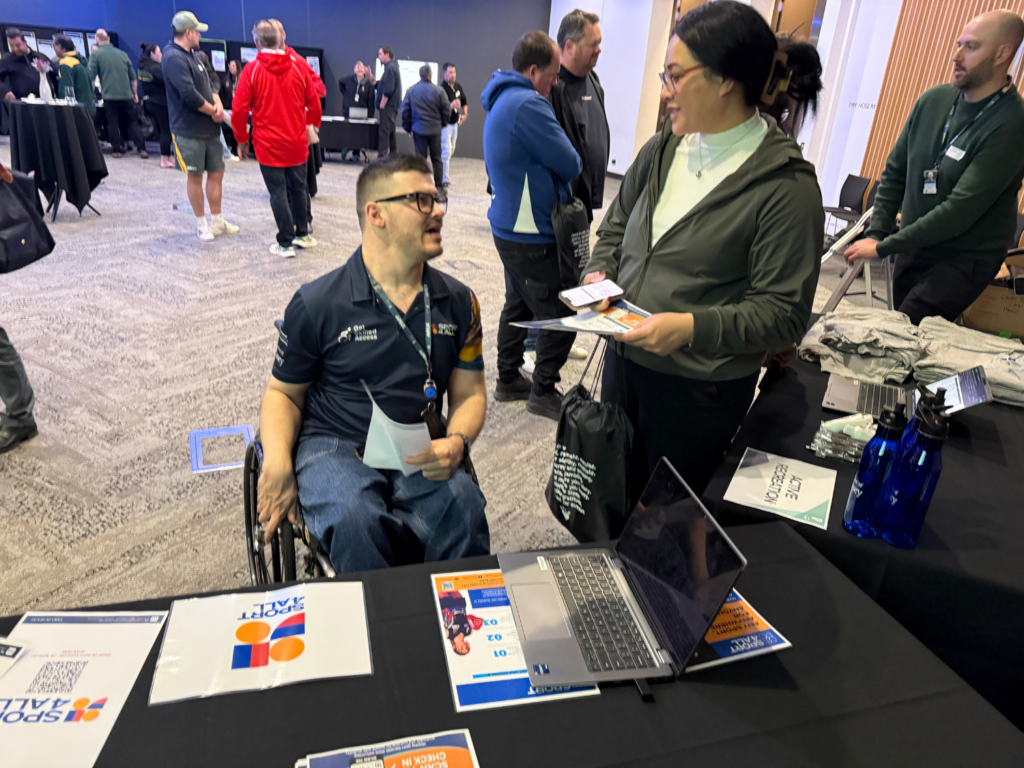
The forums gave club representatives an opportunity to learn about the accreditation program, understand Council’s expectations and connect with the people and resources available to support them.
Sport4All Inclusion Coach Oliver Hunter, who is embedded within the City of Casey, attended alongside Sport4All National Manager Carl Partridge to speak directly with club representatives about the disability inclusion pathway.
These forums were more than an introduction to a new accreditation process. They marked the beginning of a broader journey to bring Casey’s sporting clubs along as inclusion becomes part of how clubs plan, develop and demonstrate progress.
Community sporting clubs are often led by volunteers balancing governance, finances, facilities, participation and the day-to-day needs of their members.
Many clubs want to become more inclusive but can find it difficult to know where to begin or how to turn good intentions into practical and sustainable action. Disability inclusion programs can also sit outside a club’s core development priorities, with participation depending on whether an individual committee has the time, confidence or capacity to take on another initiative.
The Casey model changes that dynamic.
Rather than asking clubs to treat disability inclusion as an additional activity, Council has incorporated it into the broader framework through which clubs strengthen their operations and progress towards accreditation.
Council provides the framework, expectations and accreditation benefits. Sport4All provides the disability inclusion pathway, practical resources and capability-building support. A locally embedded Inclusion Coach helps clubs translate what they learn into realistic actions.
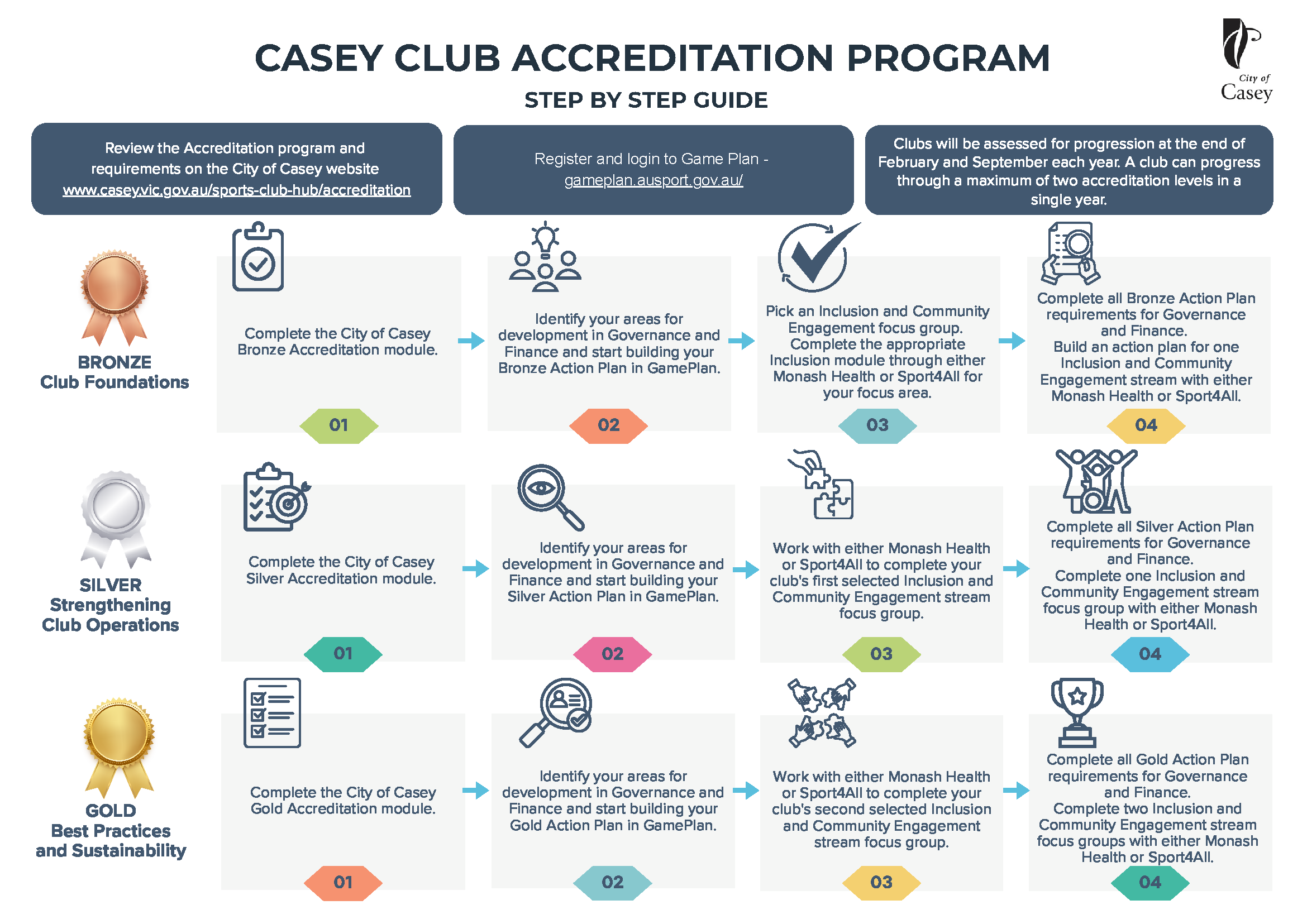
The Casey Club Accreditation Program has been designed to help sporting clubs of all sizes continuously improve across three areas:
Clubs progress through Bronze, Silver and Gold accreditation, with expectations increasing at each level.
Within the Inclusion and Community Engagement pillar, clubs choose streams that reflect the priorities of their members and community. These include:
The program is supported by tangible financial benefits. Under Casey’s current Club Accreditation Program Overview, clubs that are not accredited pay 15% of eligible Buildings and Sportsgrounds charges. This percentage reduces as clubs progress through accreditation:
Accredited clubs can also receive a Casey Club Accreditation badge, acknowledgement at seasonal sporting forums and promotion through the Casey Sports Club Hub. These benefits recognise the work clubs undertake to strengthen their operations while creating a practical reason for continuous improvement.
For clubs selecting the All Abilities stream, Sport4All provides a clear disability inclusion pathway, supported by a local Inclusion Coach.
The process helps clubs:
ASSESS → LEARN → PLAN → ACT → DEMONSTRATE PROGRESS → CONTINUE IMPROVING
As clubs progress through Bronze, Silver and Gold accreditation, the focus moves from building their foundations and developing an Action Plan to implementing actions and demonstrating progress.
Importantly, completing an assessment or developing an Action Plan is not the final outcome. Clubs are expected to put their plans into practice and show what has changed.
Sport4All Inclusion Coach Oliver Hunter is embedded within the City of Casey and works directly with local clubs throughout their inclusion journey.
His role is to help clubs understand where they currently stand, identify achievable priorities and develop actions that reflect their sport, members and local community. The locally embedded model gives clubs a consistent point of contact who understands the Sport4All pathway and Casey’s community sporting environment, and can coach clubs through their own inclusion thinking and actions.
Lived experience is also an important part of Sport4All’s design and delivery, bringing perspectives from people with disability into the way clubs think about inclusion and into their planning and decision-making.
Together, the structured pathway and locally embedded support help clubs move beyond general awareness and begin applying inclusion to their everyday practices.
The accreditation model builds on the established partnership between the City of Casey and Sport4All.
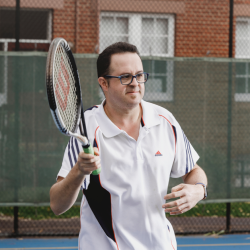
In July 2025, the City of Casey recognised Hampton Park Tennis Club as the first local sporting club to complete Sport4All and develop its own Inclusion Action Plan.
As part of the pavilion redevelopment, the club requested wider door frames at the accessible toilet to better accommodate sports chairs, which can be wider than standard wheelchairs.
The request followed a pre-renovation visit and advice from Tennis Victoria. There is also a broader connection between this work and Sport4All. Get Skilled Access (GSA), which created and manages Sport4All, worked with Tennis Australia and Tennis Victoria to develop the Accessibility and Inclusion Profile, helping clubs better understand accessibility and identify achievable improvements.
The doorway change was not a direct outcome of Sport4All. However, alongside the club’s Inclusion Action Plan, it shows how capability-building, sport-specific guidance and accessibility expertise can work together to support practical change.
The City of Casey subsequently continued its investment in Sport4All through its 2025–26 Budget, enabling more local clubs to participate and develop Inclusion Action Plans.
Incorporating Sport4All into the Casey Club Accreditation Program represents the next evolution of the partnership: moving from supporting individual clubs to embedding disability inclusion within a municipality-wide club development framework.
Rather than relying solely on individual clubs electing to engage with a standalone inclusion program, the Casey model places disability inclusion within an established municipal system that already reaches, supports and influences its sporting club network. That creates the potential for inclusion to become systemic rather than episodic.
What makes Casey’s approach significant is not simply that Council supports Sport4All.
The City of Casey has connected disability inclusion to a broader system through which it seeks to influence the capability, behaviour and sustainability of its sporting clubs.
Inclusion is supported by:
This reduces the likelihood that inclusion will depend entirely on the interest or availability of one volunteer, committee or club leader. It also reinforces a larger principle: creating opportunities for people with disability is part of what a strong, sustainable and community-focused sporting club should do.
Importantly, the approach is designed to build capability within clubs themselves. The Inclusion Coach supports clubs through the process, but the knowledge, actions and responsibility for inclusion increasingly become embedded within the club.
The Casey model provides a powerful emerging example for other local governments across Australia. It shows how councils can use their existing relationships, club development systems and local influence to make disability inclusion part of everyday community sport.
The Casey Club Accreditation Program is at the beginning of its journey. The next phase will be supporting clubs to progress through the pathway, complete their Inclusion Action Plans and implement changes within their organisations.
Success should not be measured only by the number of clubs participating or achieving accreditation. The most important measure will be what changes for people with disability as clubs put their plans into action.
By embedding Sport4All into its accreditation model, the City of Casey has established the structure needed to pursue those outcomes across its community sporting network.
It is an emerging approach with the potential to provide a practical model for other councils seeking to embed disability inclusion into community sport.
“Inclusive sport matters to me because there is no I in team and everyone is included. Inclusive sport looks like one big happy family all together. I love sport because it keeps me fit and active, and I feel part of a team”
Press ESC to close