Bethanga Cricket Club

Impact of disability inclusion in community sport

Introduction

Community sport plays a powerful role in shaping who feels welcome, who participates, and who belongs. For Bethanga Cricket Club, a small regional club in Victoria’s Towong Shire Council, inclusion was never about a single initiative or short-term fix. Instead, it became a deliberate, long-term commitment to embedding disability inclusion into the culture, decision-making, and future of the club.
 
Through engagement with the Sport4All program, Bethanga Cricket Club shifted from good intentions to structured action – using evidence, reflection, and planning to create more inclusive community sport that will benefit current and future generations.
 
This case study demonstrates how disability inclusion in community sport can extend beyond programs and policies, influencing infrastructure, partnerships, and long-term cultural change.

Background

Bethanga Cricket Club operates in a small, regional community where sporting clubs play a central role in social connection and community life. Like many grassroots clubs, Bethanga was welcoming and community-minded, but had limited visibility of how inclusive its environment truly was for people with disability.

Bethanga Cricket Club logo

What We did

With Sport4All, the club undertook an Inclusion Check-In Survey to better understand its strengths and gaps across four pillars of inclusion:
 
  • Inclusive Environment
  • Interpersonal Relationships
  • Community Participation
  • Club Culture
 
The results highlighted clear opportunities for improvement, particularly around sport participation, communication, role involvement, community perception, club-school linkages, and accountability. Importantly, the survey provided a shared language and evidence base for the club to move forward with intention.
 
Following the Inclusion Check-In Survey, the club’s President completed 100% of the Sport4All online training modules, demonstrating strong leadership commitment from the outset. Recognising this momentum, the local Sport4All Inclusion Coach facilitated a virtual meeting with Bethanga’s executive committee.
 
This session focused on:
  • Debriefing the survey results
  • Identifying practical inclusion priorities
  • Co-designing a Sport4All Inclusion Action Plan aligned to the club’s capacity and context
 
Through these conversations, several realities became clear. The club’s existing clubhouse, more than a century old, presented multiple accessibility barriers including stepped access and no accessible amenities.
 
While these barriers could not be easily addressed immediately, the club identified an important opportunity: inclusion could be embedded into future planning.
 
At the same time, the club implemented early, achievable actions, including improving accessible communication (such as printed bar menus) and strengthening links with the local school to support participation pathways.

Embedding Inclusion Beyond the Club

One of the most significant outcomes of Bethanga Cricket Club’s engagement with Sport4All was how inclusion moved beyond day-to-day operations and into long-term community infrastructure planning. 
 
The Action Plan gave the club a shared way to prioritise practical steps they could take straight away, and to carry inclusion thinking into longer-term conversations beyond the club. That thinking carried into planning for a new $3 million community sports pavilion at the Bethanga Recreation Reserve, where accessibility has been considered early in the design.
 
Using insights gained through the Sport4All Inclusion Action Plan, the club actively contributed to discussions around the design of a new sports pavilion at the Bethanga Recreation Reserve. Rather than treating accessibility as an add-on, inclusion principles were embedded early, influencing decisions that will shape how people participate, volunteer, and connect at the venue for decades.
 
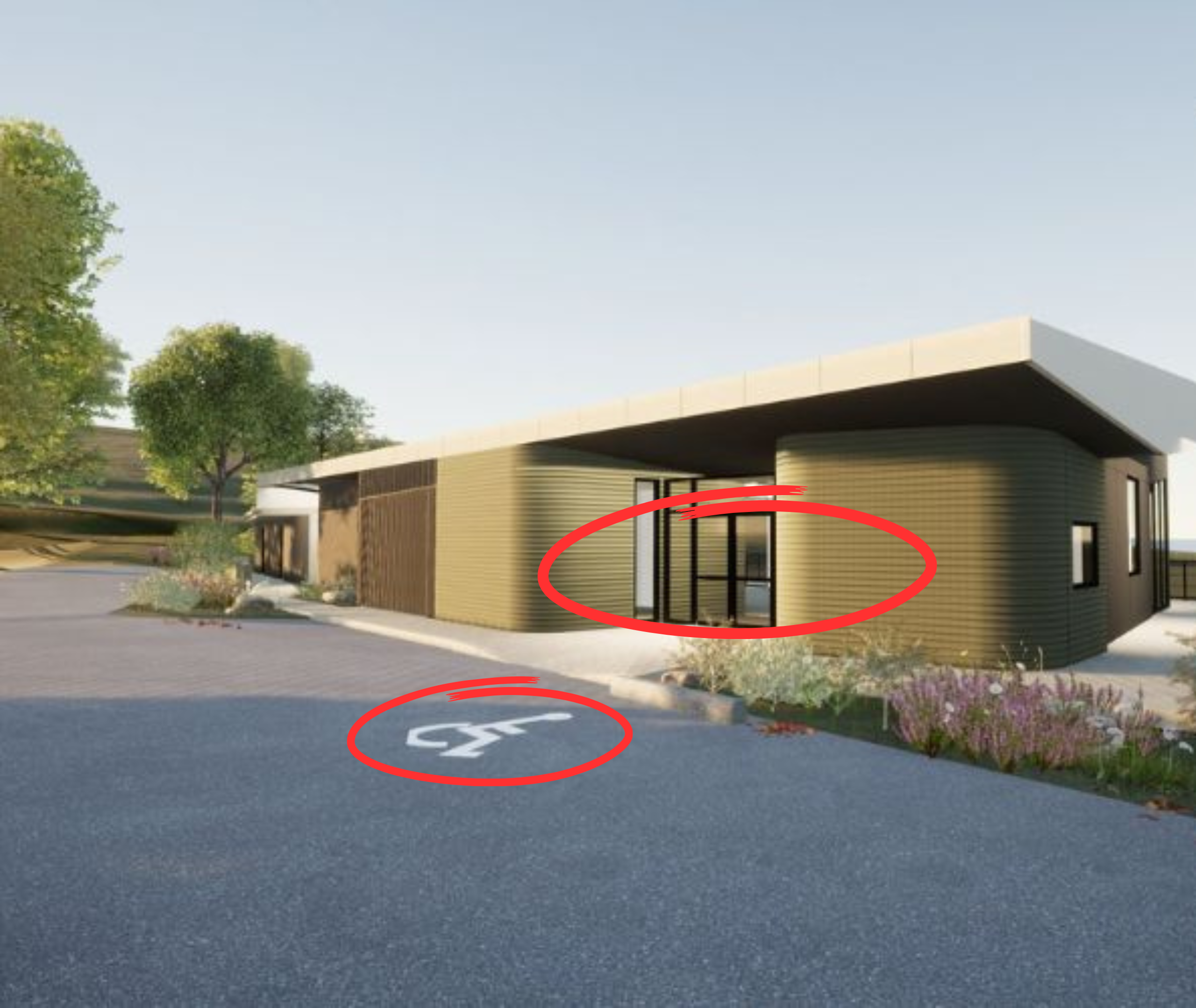
The pavilion design incorporates inclusive features such as step-free access, accessible change rooms, electronic doors, accessible parking close to entry points, and open viewing areas that support players, officials, volunteers, families, and spectators of all abilities.
 
This approach future-proofs the facility, ensuring it supports a wide range of community uses beyond cricket, including other sports, events, and programs. Inclusion is no longer limited to policy or intent – it is built into the physical environment and the club’s long-term vision.
Architectural concept image of a new community pavilion showing step-free access, automatic glass entry doors, and a marked accessible parking space positioned close to the entrance.
Concept design of Bethanga Cricket Club’s new pavilion, with accessible parking and step-free entry embedded into the facility from the outset.

Measuring Progress and Impact

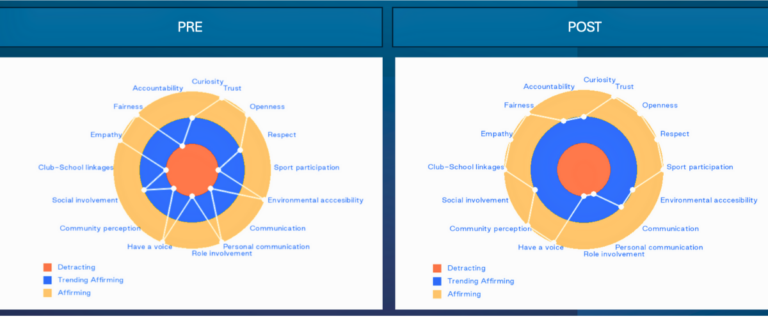
Side-by-side radar charts comparing pre- and post-program inclusion assessments across multiple areas, showing improvements from detracting and trending affirming to affirming outcomes in participation, accessibility, communication, and culture.
Pre and post program inclusion assessment results, highlighting measurable improvements across inclusion metrics.
Twelve months after initial engagement, Bethanga Cricket Club repeated the Sport4All Inclusion Check-In Survey to assess progress.
 
The results showed clear improvement across most inclusion indicators, reflecting meaningful shifts in awareness, planning, and accountability. While the club acknowledged ongoing challenges – including attracting people with disability to participate and continuing to strengthen inclusive communication and language – these challenges were recognised openly and addressed collectively.
 
Importantly, inclusion is now embedded as an ongoing responsibility rather than a completed task. Club leaders continue to hold each other accountable, using Sport4All tools to guide reflection, learning, and continuous improvement.

Why This Matters

Bethanga Cricket Club’s journey highlights what disability inclusion in community sport can look like when it is approached strategically and sustainably.
 
Rather than focusing solely on participation numbers, the club invested in building inclusive foundations – culture, leadership, planning, and infrastructure – that make participation possible over the long term. This systems-level approach ensures that inclusion is not dependent on individuals, but is embedded into how the club operates and grows.
 
For other grassroots clubs, this case study demonstrates that inclusion does not require perfection or immediate transformation. It requires commitment, evidence-based reflection, and a willingness to embed inclusion into everyday decisions.
 

Key Takeaways for Clubs:

  • Inclusion starts with honest reflection and shared accountability.
  • Leadership commitment drives meaningful change.
  • Small actions and long-term planning can progress together.
  • Inclusive design, when embedded early, has a lasting community impact.
  • Disability inclusion strengthens clubs, culture, and community participation.
 
Bethanga Cricket Club’s experience shows that when inclusion is embedded beyond the club, community sport becomes more welcoming, resilient, and sustainable for everyone.

Andrew Negrelli

“Inclusive sport matters to me because there is no I in team and everyone is included. Inclusive sport looks like one big happy family all together. I love sport because it keeps me fit and active, and I feel part of a team”

Andrew Playing Tennis

Press ESC to close

Skip to content